Claude Fable 5 vs Sonnet 5 vs Mythos 5: Which Model Should You Use?
Anthropic now has a default workhorse, a premium public model and a restricted frontier system. Here is the practical difference.
Anthropic has made model choice harder and more important at the same time. Claude Sonnet 5 is the new everyday model. Claude Fable 5 is the most capable Claude that most people can buy. Claude Mythos 5 sits above the public line but only selected partners can use it.
The simple answer is that most teams should begin with Sonnet 5. Fable 5 is for work where better judgment can justify a much larger bill. Mythos 5 is not a normal product choice. If you do not already have approved access, you cannot select it from a public menu.
First fix the name: it is Mythos 5, not Mentos 5
There is no Claude Mentos 5. There is no Claude Mintos 5 either. Anthropic's confirmed model is Claude Mythos 5.
The naming has a purpose. Anthropic says Fable 5 and Mythos 5 share the same underlying model. The difference is access and safeguards. Fable is the public version with strict safety classifiers. Mythos removes some of those restrictions for approved defensive security and research partners. Anthropic explains the split in its joint launch announcement.
This distinction matters for search and purchasing. A page that uses Mentos 5 as a product name may attract typo traffic but it also gives readers the wrong model. We use the correct name throughout this guide.
Claude Fable 5 vs Sonnet 5 vs Mythos 5
| Model | Best use | Access | Input / output price |
|---|---|---|---|
| Claude Sonnet 5 | Daily agents, coding, browser work and scalable automation | All Claude plans and API | $2 / $10 promotional $3 / $15 standard |
| Claude Fable 5 | Hard long-running agents, research, vision and high-value decisions | Public API and Claude products with usage-based access | $10 / $50 |
| Claude Mythos 5 | Advanced defensive security and selected scientific research | Invitation-only trusted access | $10 / $50 |
| Context window | 1,000,000 tokens |
|---|---|
| Maximum output | 128,000 tokens in the synchronous Messages API |
| Reliable knowledge cutoff | January 2026 |
| Inputs | Text and images |
| Output | Text |
| Thinking | Adaptive thinking. Always on for Fable 5. Default on for Sonnet 5 |
These numbers make the models look more similar than they feel. Context size is only capacity. It does not tell you how well a model stays on task or how much it costs to work across that context. Access rules also change the product more than a benchmark score can show.
What Claude Fable 5 is really for
Anthropic launched Claude Fable 5 on June 9, 2026. It calls Fable the most capable model it has made generally available. The model targets software engineering, complex analysis, vision, scientific work and agents that operate for a long time. The official release provides the capability and availability details.
The long-horizon claim is the important part. A normal chatbot answers one prompt. A long-running agent may inspect millions of lines of code, keep notes, use several tools, recover from failed attempts and continue for hours. Small errors compound in this setting. Better planning can be worth more than raw response speed.
Anthropic's launch examples are ambitious. Stripe reported a codebase migration across a 50-million-line Ruby repository. Other partners reported strong results in finance, legal review, spreadsheets, physics and production coding. These examples show the intended use. They are also vendor-selected launch testimonials. They should not replace a test on your own workload.
Fable uses adaptive thinking and the documentation lists it as always on. That makes the model simple to call but harder to budget. A difficult request can consume a large amount of reasoning and output. You are paying for the model to spend more effort when it thinks the task needs it.
Fable 5 is not the model to use everywhere. It is the model to call when a wrong turn costs more than the inference.
Fable 5 context, output and price
Fable 5 has a 1M token context window and a 128K output limit in the standard synchronous Messages API. Its reliable knowledge cutoff is January 2026. The API model ID is claude-fable-5. These limits come from the current Claude models overview.
The headline price is $10 per million input tokens and $50 per million output tokens. That is twice the standard Opus 4.8 rate. It is five times Sonnet 5's promotional input and output rate.
For consumer subscriptions the latest change matters. Anthropic extended the promotional window after Fable returned in July. According to current reporting linked to Anthropic's support notice, subscribers move to usage-based Fable billing on July 12 at 11:59 PM Pacific. A Pro or Max subscription no longer means unlimited Fable access. WIRED reported the updated deadline and rates on July 9.
Fable 5 has a second model hiding inside the experience
Fable 5 and Mythos 5 use the same underlying model. Fable adds conservative classifiers for cybersecurity, biology, chemistry and model distillation. When a request crosses those boundaries, the user does not always receive a simple refusal. The system can route the request to Claude Opus 4.8.
Anthropic says more than 95% of early Fable sessions did not trigger fallback. That sounds reassuring. The remaining percentage can still matter if your job touches defensive security, low-level debugging, research biology or chemistry. In these fields a benign request may look similar to a dangerous one. The launch post describes the classifiers and Opus fallback.
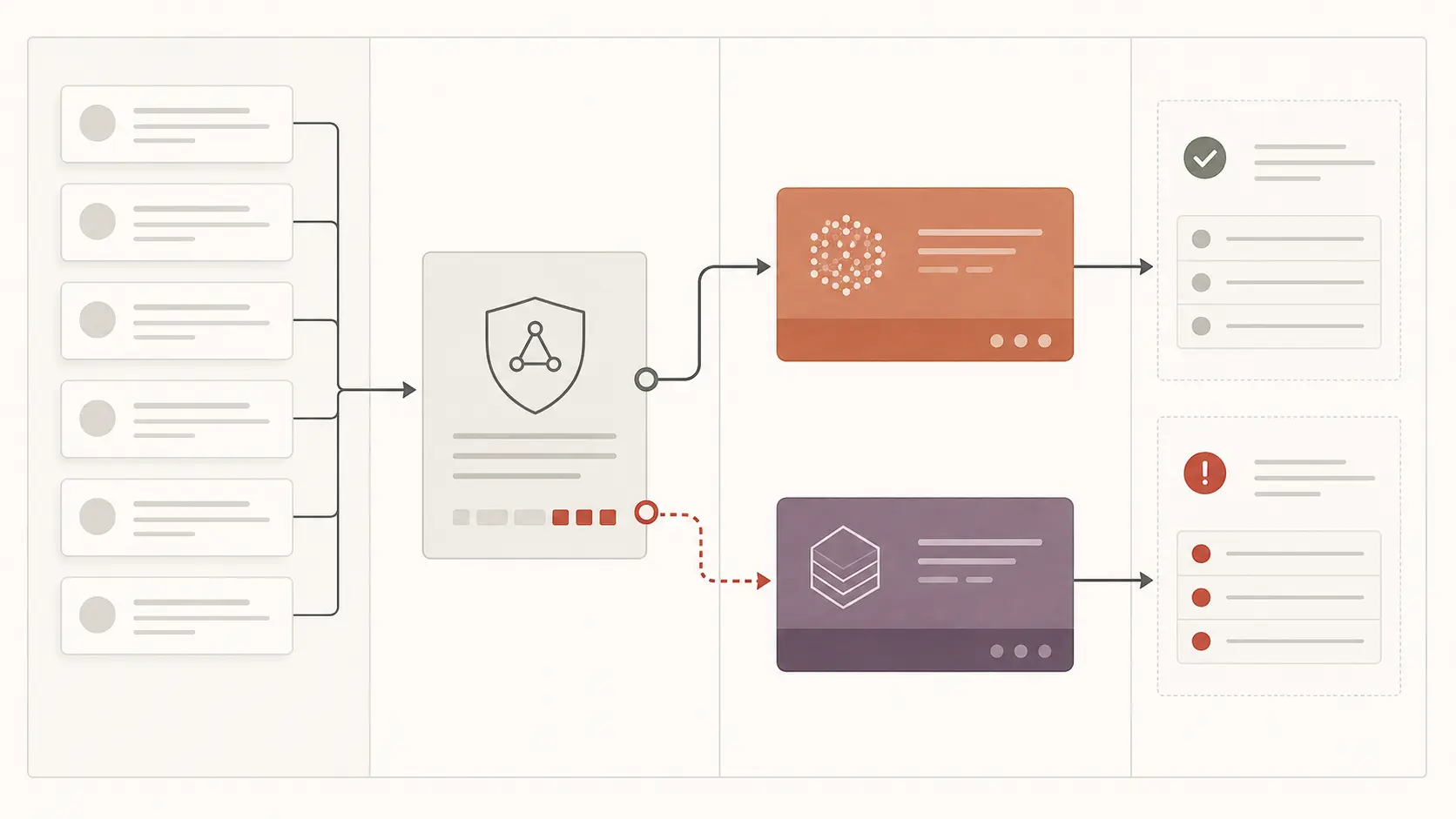
The safeguard system became a product issue soon after launch. The US government applied export controls on June 12. Anthropic suspended Fable and Mythos because it could not verify nationality in real time. The controls were lifted at the end of June. Fable returned globally on July 1 after Anthropic strengthened its classifier.
The updated classifier blocks the reported bypass in more than 99% of Anthropic's tests. The cost is more false positives in ordinary coding and debugging. This is not a footnote. It can change which model actually answers your request. Anthropic documents the suspension, redeployment and classifier change.
The data-retention tradeoff
Mythos-class traffic has a mandatory 30-day retention period. Anthropic says it does not use this data to train new Claude models. It uses the retained prompts and outputs for safety monitoring and attack detection. Content flagged for policy investigation may be held longer under the applicable policy.
This means teams handling confidential code, customer records or regulated data must review the policy before sending work to Fable. Microsoft reportedly restricted internal employee use while legal teams examined this difference. Capability alone does not make a model production-ready.
Claude Mythos 5 is powerful but it is not a public upgrade button
Claude Mythos 5 shares Fable 5's model, specifications and pricing. The difference is that selected safeguards are lifted for approved work. Anthropic positions Mythos for defensive cybersecurity and critical infrastructure through Project Glasswing. It also plans limited trusted access for some biology researchers.
There is no self-serve sign-up. Access is invitation-only. Approved organizations work with Anthropic or a cloud account team. If a comparison chart presents Mythos as a normal premium tier above Fable, that chart hides the most important fact.

Mythos matters because it reveals Anthropic's product strategy. The company is no longer dividing models only by intelligence and price. It is also dividing them by who may access particular capabilities. Fable is the route to broad Mythos-class intelligence. Mythos is the route to selected high-risk capabilities under tighter institutional control.
Claude Sonnet 5 is the model most teams should test first
Anthropic released Claude Sonnet 5 on June 30, 2026. It became the default model for Free and Pro users. It is also available on Max, Team and Enterprise plans, in Claude Code and through the Claude API. Anthropic lists availability and launch pricing here.
Sonnet 5 is positioned as the most agentic Sonnet yet. It can plan, use browsers and terminals, work through multi-step tasks and check its own output. Anthropic says its performance can approach Opus 4.8 on some tasks at higher effort.
This is a more useful product story than a claim that Sonnet is simply smarter. The model is fast enough for interactive work. It is cheap enough to run at scale. It is capable enough to finish workflows that older mid-tier models abandoned halfway through.

The safety profile is different from Fable. Anthropic says Sonnet 5 shows fewer undesirable behaviors, hallucinations and sycophantic responses than Sonnet 4.6. It also reports better resistance to prompt injection. Sonnet uses cyber safeguards but they are less restrictive than Fable's because the model has weaker high-risk cyber capability.
Three Sonnet 5 API changes can break a quiet migration
Sonnet 5 is described as a drop-in upgrade from Sonnet 4.6. That phrase needs an asterisk. Three behavior changes can produce errors or surprise bills.
1. Adaptive thinking is on by default
A request without a thinking field now uses adaptive thinking. You can disable it with thinking: {type: "disabled"}. The default effort is high on the API and in Claude Code. Set effort explicitly when latency and cost matter.
2. Manual extended thinking is removed
The old manual token budget for extended thinking returns a 400 error. Use adaptive thinking and the effort parameter instead.
3. Custom sampling parameters are rejected
Non-default values for temperature, top_p and top_k return a 400 error. Use system instructions or structured output controls to guide behavior.
Claude 5 pricing: calculate the task, not only the token rate
| Model | Input | Output | Total |
|---|---|---|---|
| Sonnet 5 promotional | $2 | $10 | $12 |
| Sonnet 5 standard | $3 | $15 | $18 |
| Fable 5 | $10 | $50 | $60 |
| Mythos 5 | $10 | $50 | $60 |
The example is intentionally simple. Real agent costs include tool calls, repeated context, hidden reasoning, retries and verification. A model with a higher token rate can still be cheaper if it completes the job in fewer attempts. A cheap model can become expensive when it loops.
Start with a task-level budget. Measure successful completion. Include human review time. Track input, cache hits, output, thinking, tool calls and failed runs. Compare the total cost of a verified result.
Fable's economics make sense when one task is valuable. A code migration, a legal analysis or a research decision may justify $60 or much more. Using Fable to summarize routine support tickets rarely does.
What early users and partners are actually saying
Public reaction to Fable is positive about capability and nervous about consumption. One early Reddit user described the model as exceptionally strong but reported watching a Max-plan allowance fall by roughly two percentage points per minute during a heavy session. Another reaction criticized the split between a public safe model and a more capable trusted version. TechRadar collected these early reactions.
These comments are anecdotes. They do not prove a general token-consumption rate. They do reveal the two issues users notice first. Fable can feel materially better. It can also make cost and access visible almost immediately.
Sonnet 5 feedback is newer. Anthropic's launch page includes reports of better follow-through, stronger work on messy existing code, more reliable browser actions and fewer steps to a result. Those reports come from selected early-access partners. They are useful signals but not independent evidence.
The most honest position is simple. Sonnet 5 has the stronger default economics. Fable 5 has the stronger capability story. Mythos 5 has the least public evidence because access is restricted.
Which Claude model should you choose?
| Your workload | Start with | Reason |
|---|---|---|
| Daily coding and pull requests | Sonnet 5 | Strong agentic execution at a sustainable price |
| Browser and computer-use agents | Sonnet 5 | Good tool use with adjustable effort |
| High-volume support or operations | Sonnet 5 | Better cost profile for repeated tasks |
| Very hard repository migration | Fable 5 | Long-horizon planning can justify the premium |
| Complex finance, legal or research analysis | Fable 5 | Use when better judgment has high value |
| Confidential work under strict ZDR rules | Review first | Fable requires 30-day retention |
| Advanced defensive security | Mythos 5 | Only if your organization has trusted access |
Our recommended routing strategy is practical. Send most work to Sonnet 5. Escalate to Fable when Sonnet fails a quality gate, when the task has a high expected value or when the cost of human recovery is large. Do not build a workflow around Mythos unless access is already confirmed.
This approach protects the budget without treating every task as ordinary. It also gives you evidence about when Fable's premium pays for itself.
A seven-step production test
- Collect 30 to 100 real tasks. Do not use only clean benchmark prompts.
- Define success before testing. Include correctness, tool use, style and safety.
- Run Sonnet 5 at medium and high effort. Set the effort explicitly.
- Run Fable 5 on the hardest subset. Record any fallback to Opus 4.8.
- Measure total tokens, retries, tool calls, latency and human review time.
- Check data-retention requirements before testing confidential material.
- Route by outcome. Keep Fable only where it improves the verified result enough to cover the premium.
Do not compare one impressive demo. Compare distributions. The model that wins a spectacular task may still be the wrong default for ten thousand routine jobs.
Our conclusion
Claude Sonnet 5 is the most important release for most users. It moves agentic work closer to the price of an everyday model. It should be the first test for coding, research, browser tasks and automation.
Claude Fable 5 is more unusual. It gives the public access to Mythos-class intelligence but wraps that access in strict classifiers, mandatory retention and usage-based economics. It may be the best choice for the hardest work. It is a poor choice for work that does not need it.
Claude Mythos 5 is not a better subscription. It is a controlled program for organizations working in sensitive domains. That is the clearest way to understand Anthropic's new lineup.
Verification
Sources and references
- Anthropic: Claude Fable 5 and Claude Mythos 5
- Anthropic: Redeploying Fable 5
- Anthropic: Introducing Claude Sonnet 5
- Claude Platform Docs: Models overview
- Claude Platform Docs: What's new in Sonnet 5
- WIRED: Fable 5 usage-based consumer billing
- TechRadar: Early Fable 5 user reactions
- The Verge: Fable 5 data-retention concerns
FAQ
Does Claude Mentos 5 exist?
Is Fable 5 the same model as Mythos 5?
Should I use Sonnet 5 or Fable 5 for coding?
How much does Claude Fable 5 cost?
How much does Claude Sonnet 5 cost?
What context window do these Claude 5 models have?
Can anyone use Claude Mythos 5?
Does Fable 5 retain business data?
 LaPrompt AI News Aug 7, 2026 Better AI Code Without Watching Every Step GPT-5.6 Sol and Claude Opus 5 debate the approach in a shared log before writing code. Three incidents show where the human gate still matters.
  LaPrompt AI News Jul 31, 2026 Powerful Models I Still Wouldn’t Leave Unsupervised A real-world GPT-5.6 review covering Codex, long-chat context loss, Sol limits, subagent cost, SaaS coding, documents, pricing and practical fixes.
  LaPrompt AI News Jul 12, 2026 GPT-5.6 Sol vs Fable 5 vs Grok 4.5: Real Tests and Cost GPT-5.6 Sol vs Claude Fable 5 vs Grok 4.5 across real coding tests, API pricing, speed, context, reliability, benchmarks, and developer feedback.
Comments
0 totalLoading comments...